
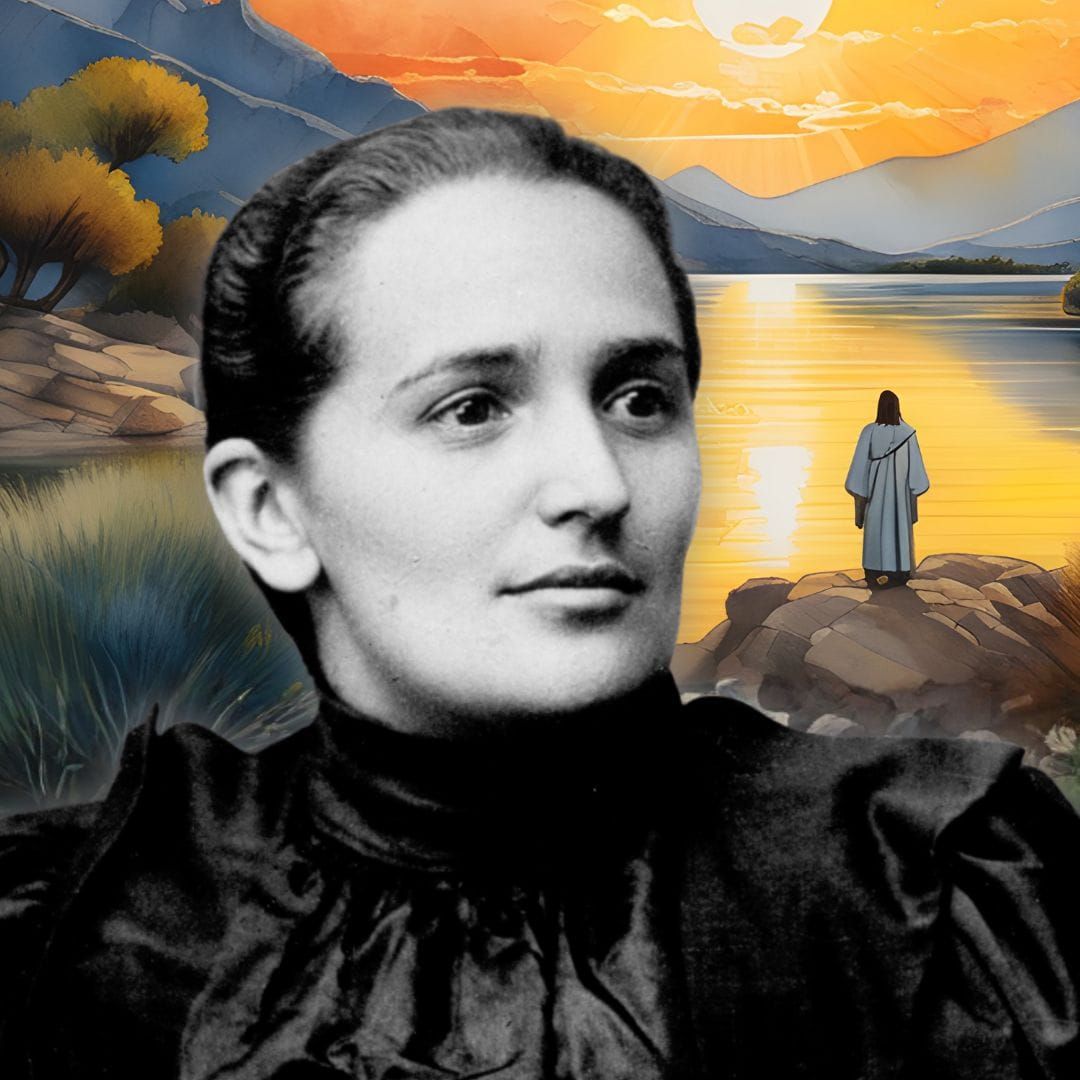
Laura Montoya, better known as Mother Laura, is not only the first Colombian saint but also an emblematic example of the “feminine genius” in the history of Colombia and the Church, as Pope Saint John Paul II described in his Apostolic Letter Mulieris Dignitatem.
Born in Jericó, Antioquia, in 1874, Laura grew up in hardship after her father’s death in the civil war. From a young age, she showed a deep religious calling and a steadfast determination to challenge the limitations placed on women in her time. She became a generous teacher, a bold missionary, a profound mystic and prophet, a passionate writer, and a courageous founder.
No one could have imagined that Laura—a simple teacher, like so many women of her era—would become a trailblazer and role model for generations of women to come.
Her missionary work among the Indigenous people astonished many and was marked by the difficulties of the era in which she lived. Yet, she believed deeply in the dignity of people who were often forgotten, and her legacy continues to inspire today.
Beyond her courage to venture into the jungle and lovingly welcome the Indigenous communities, several defining moments in her life reveal her extraordinary strength and faith:
1) The Story of the Anthill
At just six years old, Laura recognized the greatness of God and His creation simply by observing an anthill. Watching how the ants worked in harmony and perfection filled her with awe. This moment revealed the spiritual sensitivity she possessed, even as a child.
2) The Attempted Abuse at Age 13
After her father’s death, Laura and her siblings went to live with relatives. While staying at her aunt’s home, a cousin attempted to abuse her. Despite her young age—and at a time when such matters were rarely spoken of—Laura fought back and managed to defend herself. She showed remarkable strength and courage in the face of danger.
3) At only 16 years old, she became the administrator of a mental hospital.
At only 16 years old, Laura became the administrator of a mental hospital in Medellín. She needed both a place to live and a way to help support her family. Her aunt, María de Jesús Upegui, the hospital’s director, took her in and gave her work. While managing the hospital, Laura also studied at night to become a teacher. Her determination, creativity, and perseverance were evident even then.
4) She endured slander as a school director.
From 1901 to 1914, Laura served as principal of La Inmaculada School in Medellín. Though she was not yet a nun, she faced serious accusations from the family of a student named Castro, who claimed Laura had pressured their daughter to abandon her marriage plans and enter a Carmelite monastery.
Amid the controversy, Laura courageously defended women who were not biological mothers, highlighting the beauty of spiritual motherhood as a fulfilling path for single or consecrated women. However, the opposition against her became so strong that the school was eventually forced to close.
5) Conflicts with Bishops
In 1914, Laura founded the Congregation of the Missionaries of Mary Immaculate and Saint Catherine of Siena, dedicating herself to missionary work among the Indigenous peoples of Dabeiba. Several bishops at the time opposed her efforts, questioning her calling and objecting to women evangelizing in the Antioquian jungle.
For many Church leaders of that era, missionary work was seen as the role of priests and religious men. But Mother Laura proved that where they could not go, the strength and tenderness of women could.
Accompanied by six women—and traveling on mules—she ventured into the mountains, describing the experience beautifully in her autobiography:
“We left Uramita as happy as if we were going to Rome. Dabeiba had been our delirium; they knew well that she was like the incarnation of my dream. (…) Ana Saldarriaga saw two enormous snakes and didn't warn anyone because she was on horseback, and if she spoke, the mule would knock her down. That wasn't difficult at all, because snakes were abundant in that place. That same day, we put aside our titles as young ladies. We agreed to call each other sisters, to better ensure respect. Immediately after I proposed this name to my companions, they replied that they would call me Mother. My authority wasn't soft; it was as energetic as our commitment to God and to men required, apart from the supreme pain of their souls. I understood very clearly that the success of the undertaking depended on the energies and self-denial of the former, and on proving to the world that the work was possible in the hands of women.” (History of the Mercies of God in a Soul)
6) The First Woman in Colombia to Receive the Cross of Boyacá
The Cross of Boyacá, one of Colombia’s highest honors, is awarded to those who have rendered distinguished service to the country in areas such as politics, culture, science, or social work. In all of Colombia’s history, only two women have received this honor—the first was Mother Laura.
7) Her Request to Pope Pius XII
Long before the Second Vatican Council, Mother Laura wrote to Pope Pius XII, requesting that religious sisters be allowed to distribute the Eucharist in mission territories where priests were not present, something unthinkable at the time. She was unsuccessful, but she was a pioneer in recognizing this need in the Church, which was later approved.
Saint John Paul II once wrote:
“In this broad sphere of service, the history of the Church in these two millennia, despite so many constraints, has truly known the 'genius of women,' having seen women of great stature emerge from within her who have left a broad and beneficial mark of themselves over time. I think of the long series of martyrs, saints, and distinguished mystics. I think in particular of Saint Catherine of Siena and Saint Teresa of Avila, to whom Pope Paul VI granted the title of Doctors of the Church. And how can we fail to remember, in addition, the many women who, moved by faith, have undertaken initiatives of extraordinary social importance, especially in the service of the poorest? In the future of the Church in the third millennium, new and admirable manifestations of the 'feminine genius' will certainly continue to occur."
Mother Laura wrote more than 30 books, chronicling her mystical experiences and missionary work. After a lifetime of service to God and others, she died in Medellín on October 21, 1949.
Her life and legacy embody the strength, compassion, and vision of the great women who have shaped Latin American history. It is no coincidence that Colombia’s first saint is a woman.